The International Building Code (IBC) and the International Residential Code (IRC) provide guidelines for earthquake restraints for MEP (Mechanical, Electrical, and Plumbing) systems to ensure safety and operational integrity during seismic events.
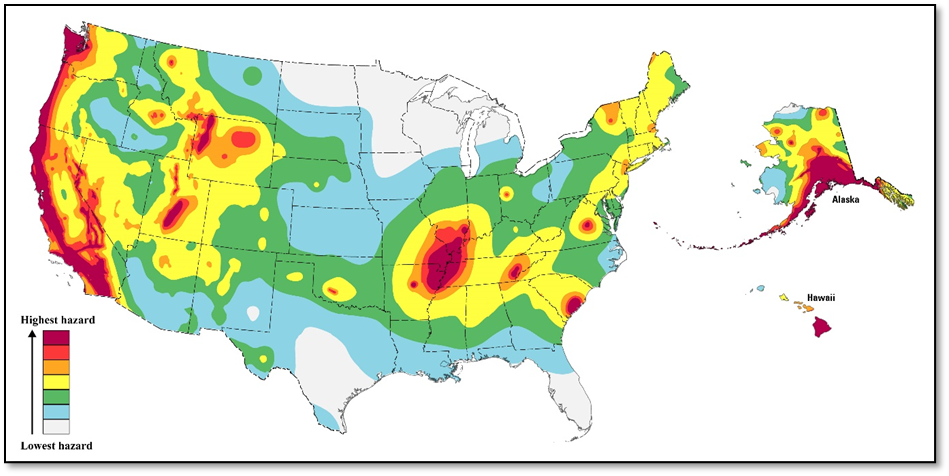
Photo: USA Seismic map
International Building Code (IBC):
Seismic Design Categories:
The IBC assigns a “Seismic Design Category (SDC)” (A through F) based on the building’s location, type of occupancy, and structural system. For MEP systems, the stricter seismic requirements apply to buildings in SDC D, E, and F (higher seismic risk).
Restraint of MEP Components (IBC Section 1613 and ASCE 7-16):
Seismic Restraint Requirements:
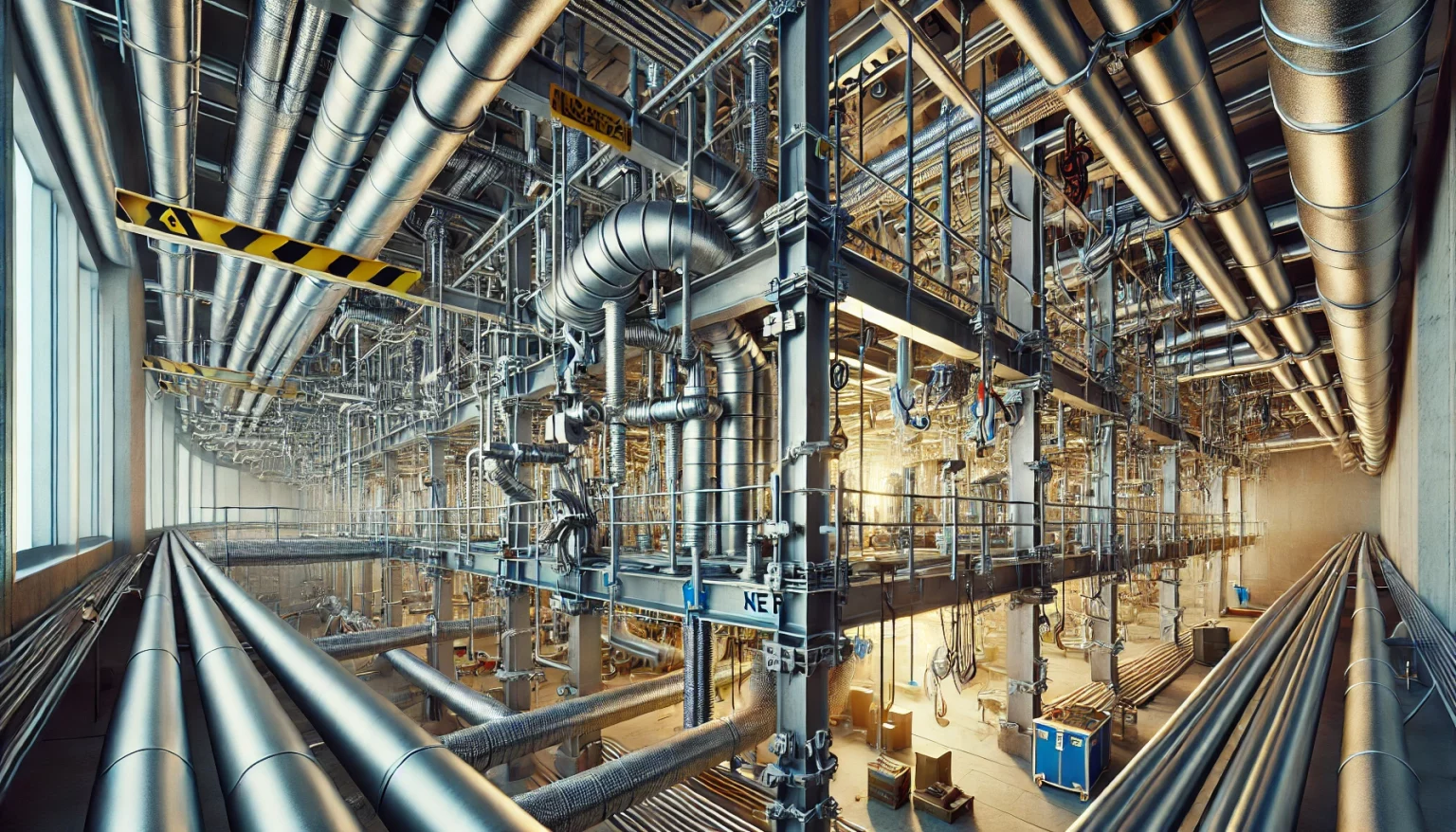
MEP components such as piping, ductwork, electrical equipment, and HVAC systems must be restrained to prevent movement during an earthquake. The required restraint design depends on the weight, importance factor, and height of the component within the building.
Non-structural Component Restraints:
Non-structural MEP components are required to be anchored or braced to resist seismic forces based on their location in the building.
For buildings in higher seismic zones, MEP components need to be secured to prevent them from detaching or moving in ways that could harm building occupants or compromise critical systems (e.g., fire suppression systems).
Component Importance Factor (Ip):
MEP components that are crucial for life safety (e.g., emergency systems, fire alarms, or systems serving emergency rooms) have a higher Importance Factor (Ip) of 1.5, which increases the seismic design forces that must be resisted. Non-essential systems typically have an Ip of 1.0.
Specific Equipment Restraints:
Suspended HVAC Ductwork: Ductwork must have lateral bracing, particularly if it serves as a critical system. Flexible connections should be used to accommodate movement.
Piping Systems: Piping in high-risk seismic zones must be supported with seismic restraints, especially if carrying hazardous materials or used in fire suppression.
Electrical Equipment: Electrical panels, generators, and transformers require anchoring to prevent tipping or sliding during an earthquake.
Seismic Certification
Seismic-certified equipment is often required in SDC D, E, and F. Manufacturers provide testing to ensure the equipment will function after a seismic event.
International Residential Code (IRC):
The IRC generally applies to smaller, detached one- and two-family dwellings. The seismic restraint requirements for MEP systems in the IRC are less stringent than in the IBC but still provide guidelines for areas prone to seismic activity.
Seismic Design Categories:
Like the IBC, the IRC references seismic design categories. However, since the IRC focuses on residential structures, the categories are typically less strict, often stopping at SDC C unless the location has significant seismic risk.
Restraint of MEP Components (IRC):
Piping and Ductwork:
The IRC requires “seismic bracing for suspended piping and ductwork” in higher seismic zones (SDC C and above).
Gas piping must be restrained to minimize the risk of leaks during an earthquake.
Anchorage of Equipment:
Water heaters and other heavy appliances must be anchored to prevent tipping or damage in earthquake-prone areas. The IRC provides prescriptive anchoring methods to meet this requirement.
Emergency Systems:
Similar to the IBC, the IRC requires that emergency systems, such as fire suppression and essential electrical systems, be designed to resist seismic forces.
Summary of Key Restraint Requirements:
Responsive Table
Component
IBC Requirement
IRC Requirement
Seismic Category
Based on location (A–F, strict in D–F)
Residential, stricter for SDC C and above
Ductwork
Bracing for suspended systems
Bracing for suspended systems (in SDC C or above)
Piping
Anchors and flexible connections required
Restraints for gas piping (in SDC C or above)
Electrical
Anchoring for critical electrical equipment
Restraints for heavy electrical equipment
HVAC Systems
Seismic bracing for rooftop/suspended equipment
Anchoring for heavy HVAC equipment
Emergency Systems
Higher Importance Factor (Ip = 1.5)
Similar requirements for critical systems
Both the IBC and IRC refer heavily to ASCE 7-16 for detailed seismic restraint calculations and design guidelines. For any specific project, it’s essential to check the exact seismic category and ensure that all components are properly restrained according to local amendments or interpretations of these codes. any local amendments or requirements specific to your project location.
REFERENCES
International Building Code and International Residential Code.



.png)
