

.png)


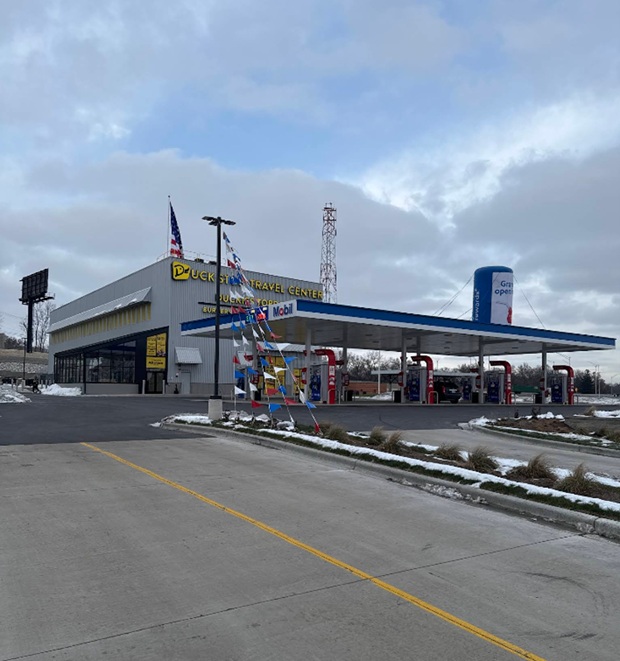
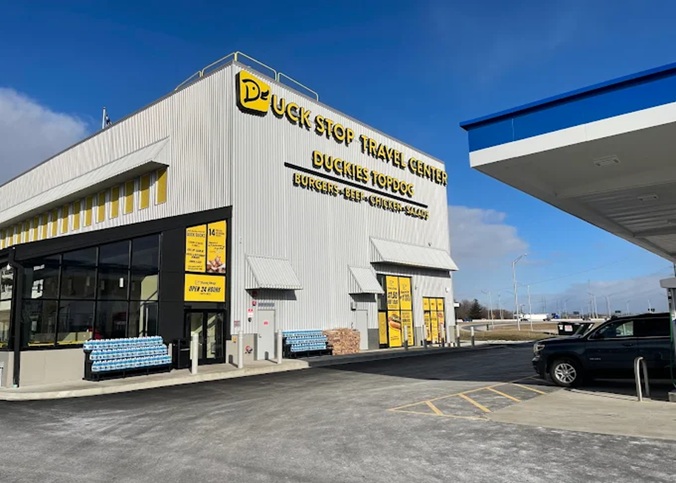
Duck Stop Travel Center is a modern, full-service travel center designed to support the needs of professional drivers, travelers, and retail customers through a combination of fueling services, convenience retail, food service, and customer amenities. The Mechanical, Electrical, and Plumbing (MEP) design was developed to provide a reliable, energy-efficient, and code-compliant infrastructure capable of supporting continuous 24-hour operation while maintaining occupant comfort, indoor air quality, operational efficiency, and overall facility reliability. The electrical design included power distribution, interior and exterior lighting, emergency and egress lighting, equipment power connections, grounding, and system coordination for the fueling, retail, restaurant, and support areas to ensure safe and efficient operation throughout the facility.
The mechanical design included HVAC systems serving the convenience store, retail areas, restaurant, commercial kitchen, restrooms, storage rooms, and support spaces throughout the facility. Air distribution systems were carefully designed and coordinated to provide proper ventilation, temperature control, indoor air quality, and occupant comfort while supporting the operational demands of a high-traffic, 24-hour facility. Dedicated kitchen exhaust and make-up air systems were in corporated to support commercial cooking operations, maintain proper building pressurization, and comply with applicable mechanical and fire safety codes. Exhaust systems serving restrooms and service areas were designed to provide adequate air exchange and maintain a healthy indoor environment. Special attention was given to equipment accessibility, serviceability, and system reliability, with equipment selection and system layouts optimized for long-term performance, operational efficiency, and ease of maintenance.
The plumbing design included domestic water, sanitary drainage, venting, natural gas, and grease waste systems serving the travel center and restaurant facilities. Extensive coordination with civil drawings was performed to verify sanitary sewer routing, invert elevations, underground utilities, and connections to existing infrastructure, ensuring a constructible and code-compliant design. The scope also included a centralized domestic hot water system utilizing storage tanks and indirect water heaters (IWH), with hot water recirculation provided to maintain reliable service, consistent delivery temperatures, and energy-efficient operation throughout the facility.
Pipe in the gas distribution system, designed to safely deliver natural gas to the RTUs, and other gas-fired equipment, was based on appliance load requirements, pressure drop limits, and allowable flow rates to meet relevant codes.
Additionally, the design incorporated backflow prevention, pressure regulation, and energy-efficient water systems to comply with local and international plumbing codes. The team also coordinated plumbing layouts with mechanical and electrical systems to provide a fully integrated MEP solution for the facility.
The project involved the renovation of an existing facility, utilizing the existing electrical utility service, switchboards, and panel boards to support new spaces and equipment. A comprehensive assessment of the existing electrical distribution system was performed to verify available capacity, identify spare circuit availability, and ensure compliance with service and equipment loading limitations. As the project was executed in multiple phases, electrical systems for Phase 2 were carefully coordinated with the Phase 1 design and construction requirements.
The scope included the development of power distribution plans, Load calculation, panel schedules, and lighting control designs. Lighting systems and controls were engineered to comply with applicable IECC energy efficiency requirements, including occupancy sensors, automatic lighting controls, and shutoff strategies, while maintaining full compliance with NEC requirements for circuit protection, grounding, and electrical distribution.
The project also included the design of a fuel station electrical system, for which detailed power and lighting plans were developed to satisfy operational needs, client requirements, and applicable code standards.
With all 3S MEP projects, a primary focus is on integrating MEP and structural designs with the construction and architectural partners and the end-users to minimize the need for design adjustments or revisions during the construction process. Design teams from 3S MEP actively engage with all stakeholders to identify potential conflicts and optimize the overall system layout. Our teams are exceptionally proficient at harmonizing essential building elements for successful outcomes.

3S MEP + S provides integrated MEP, Fire Protection, Fire Alarm, BIM, Energy Modeling, and Structural Engineering services for building projects.
.png)