

.png)


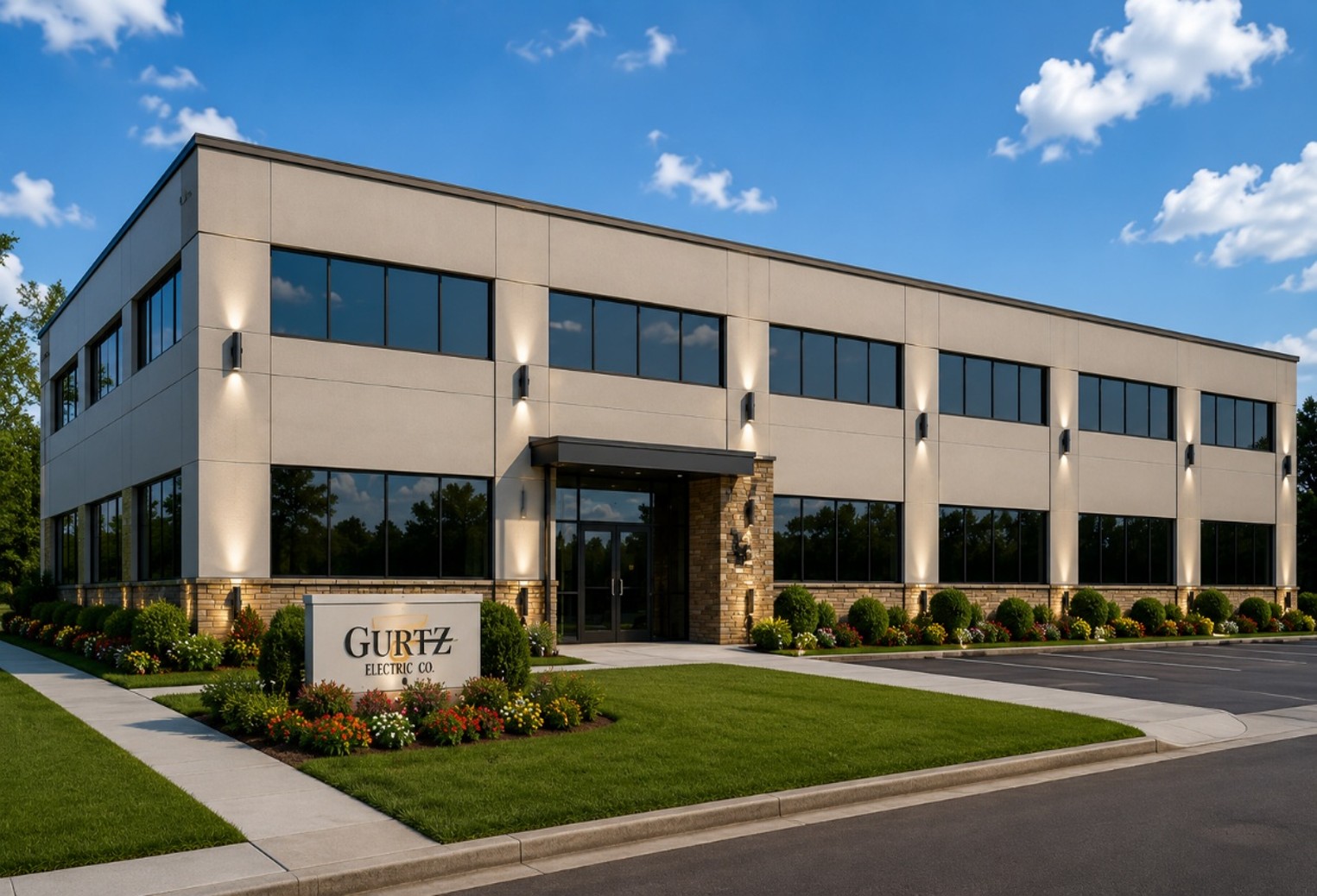
The Gurtz Electric Co. in ArlingtonHeights, IL, is a two-story office building. As they were remodelling the second-flooroffice space. The mechanical system on second floor were designed by 3S MEP+S, deliveringa fully coordinated and efficient building system solution with variable airvolume.
The mechanical system was designedas a high-performance HVAC solution tailored to serve a multi-zone officeenvironment with varying occupancy loads. The primary system consists of agas-fired rooftop unit providing DX cooling with a multizone VAV distributionstrategy. The rooftop unit was selected and sized using HAP load calculationsto meet both peak cooling and heating demands across all zones.
Air-side systems were designed series fan-powered VAVterminal units with electric reheat, enabling precise zone-level temperaturecontrol in response to varying occupancy conditions throughout the building.The deliberate selection of series fan-powered VAV boxes — as opposed to parallelfan-powered or pressure-dependent units — had a direct and significant impacton the primary duct system design. Because series fan-powered VAV boxesrecirculate plenum air continuously through their integral fan, the primarysupply duct only needs to carry the primary cooling airflow to each box ratherthan the full downstream discharge volume. This allowed the primary supplyductwork to be sized considerably smaller than it would have been with aconventional single-duct VAV system, resulting in reduced ceiling spacerequirements, lower duct material costs, and improved installation coordinationacross the congested office ceiling plenum.
The supply duct system was further optimized through adeliberate loop layout design. Rather than routing supply air in a conventionalsingle-path branching tree configuration, the main supply duct was designed torun in a closed loop around the floor plate, feeding VAV terminal units fromboth directions. This loop arrangement equalizes static pressure distributionacross all zones, reduces the pressure differential between near and far VAVboxes, and improves overall system balance, minimizing the balancing effortrequired during commissioning and ensuring more consistent airflow delivery toall zones under varying load conditions.
A key client requirement drove an additional importantdesign decision: the electric reheat coils integrated within each VAV terminalunit were specifically sized and configured to operate as a standalone heatingsource during unoccupied nighttime hours, providing space warmth independentlywithout the need to run the rooftop unit. This approach allows the building tomaintain setback heating conditions overnight in an energy-efficient manner,operating only the individual zone fans and electric coils as needed, while theRTU remains off. Advanced control strategies are supported throughBAS-compatible DDC controllers on each terminal unit, includingdemand-controlled ventilation in compliance with IMC 2018. The cafeteria zoneis served by a high-capacity VAV terminal unit with elevated electric heatcapacity to address the unique thermal demands of the space.
The ventilation and exhaust systems were designed incompliance with ASHRAE 90.1 and IMC 2018, incorporating properly sized outsideair and exhaust air systems. Two dedicated direct-drive centrifugal roofexhaust fans handle building exhaust, with exhaust ducts routed directly toroof terminations. All ductwork was designed and sized in accordance withSMACNA standards, with full insulation schedules developed per IECC ClimateZone 5A requirements.
Themechanical equipment layout was carefully coordinated to ensureconstructability and service accessibility, with detailed installationrequirements for the rooftop unit, VAV terminal units, and ductwork systems.All equipment was selected and coordinated with electrical systems to matchpower requirements, and all roof penetrations were detailed with proper curb,flashing, and condensate drain requirements.

3S MEP + S provides integrated MEP, Fire Protection, Fire Alarm, BIM, Energy Modeling, and Structural Engineering services for building projects.
.png)